Drop-in Gateway
On the left side of the web Admin Panel, go to NETWORK -> Drop-in Gateway.
Drop-in Gateway is an extension function that enables capability expansion for an existing primary router without replacing or reconfiguring it. By connecting the GL.iNet router to the primary router via an Ethernet cable, users can add advanced network features onto the existing network infrastructure, for example:
- Filter advertisements via AdGuard Home
- Enable VPN client
- Use encrypted DNS
It is recommended to use a higher-performance router or security gateway with ample memory (e.g., GL-MT2500, GL-MT5000) and install additional traffic forwarding and control tools as required.
Network Topology
Drop-in Gateway operates as an intermediate network system, routing data traffic from client devices through the GL.iNet router for processing before transmitting it via the primary router. During this process, it not only preserves existing network settings (e.g., SSID and password) to ensure uninterrupted connectivity for all connected devices, but also allows you to manage network traffic for all or specific client devices as needed.
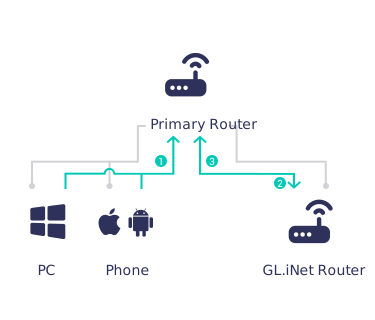
The diagram above consists of two types of lines: gray lines, and green lines marked with three arrows, each labeled with a corresponding number.
-
Gray lines illustrate the physical connection topology: client devices (e.g., computer, laptop) connect to the primary router, and the primary router's LAN port links to the WAN port of the GL.iNet router (with Drop-in Gateway enabled) via an Ethernet cable.
-
Green lines depict the sequential data transmission path when Drop-in Gateway is active, with the numbered arrows indicating the traffic flow order:
-
Traffic from client devices is first routed to the primary router;
-
The primary router forwards the traffic to the GL.iNet router for processing (e.g., ad filtering, VPN encryption);
-
After processing, the traffic is sent back to the primary router, which then either delivers the final data to the original client devices or routes it out to the Internet.
-
Setup
There are two deployment modes for different application scenarios: All client devices are networked through Drop-in Gateway, or only specific client devices are networked through Drop-in Gateway.
In the following example, the gateway address of the primary router is 192.168.1.1.
All devices are networked through Drop-in Gateway
-
Connect the LAN port of the primary router to the WAN port of the GL.iNet router via an ethernet cable.
-
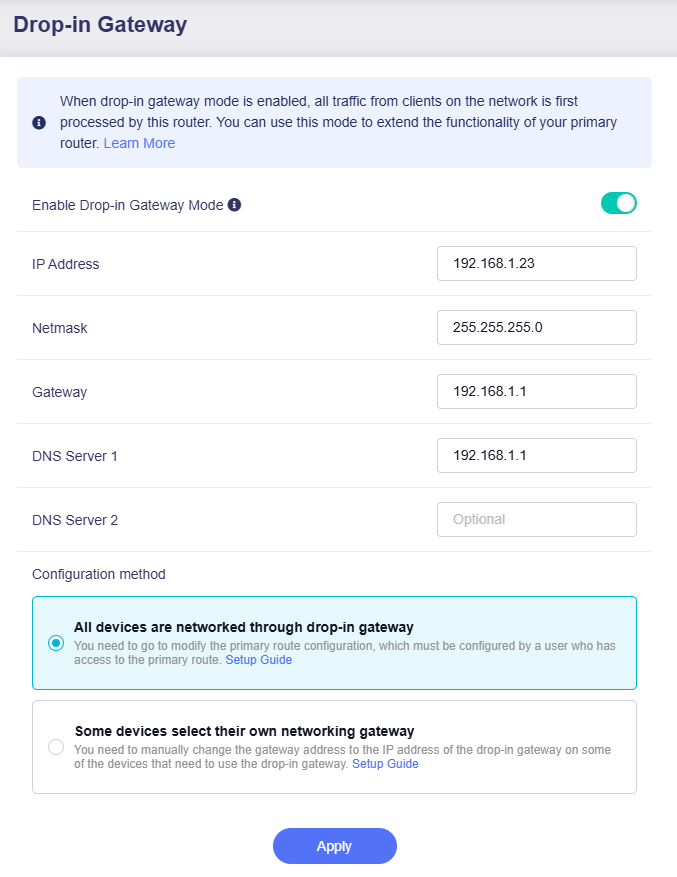
Log in to the web admin panel of your GL.iNet router, enable Drop-in Gateway, and the system will automatically generate the corresponding configuration parameters.
-
The IP Address refers to the WAN IP address of your GL.iNet router, which is dynamically assigned by the primary router. This WAN IP can be viewed in the Ethernet section of the INTERNET page.
-
The Gateway and DNS Server 1 fields are automatically filled with the IP address of the primary router by default. If these parameters are incorrectly configured, you can manually adjust them as needed.
Write down the IP address here, as you will use it in the following steps.
Select the first configuration method and click Apply.
-
-
Log in to the web admin panel of your primary router.
GL.iNet
If your primary router is GL.iNet and it runs firmware v4.2 and above, follow the steps below.
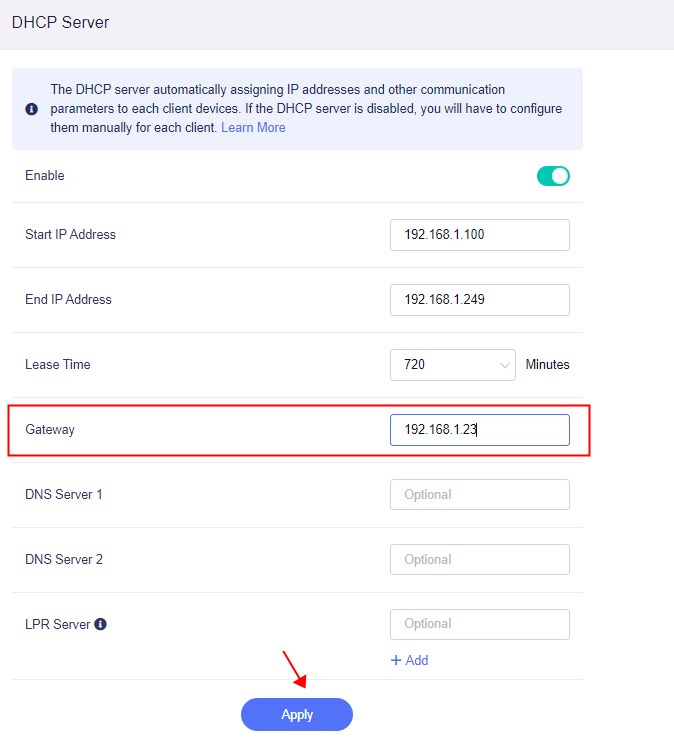
Log in to the web Admin Panel -> NETWORK -> LAN -> DHCP Server -> Advanced
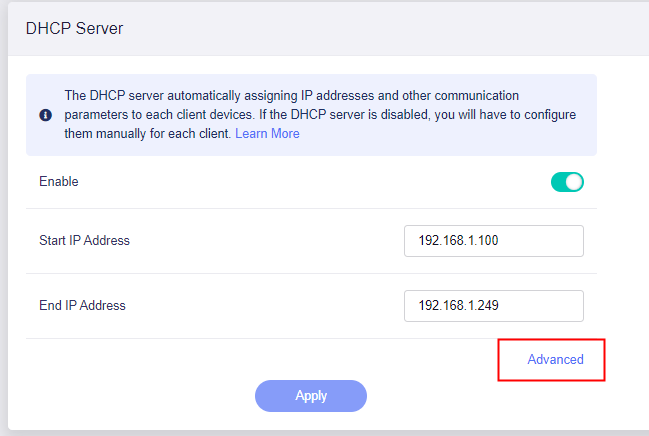
Fill in the DHCP Gateway as the IP Address in step 2, etc,
192.168.1.23, then click Apply.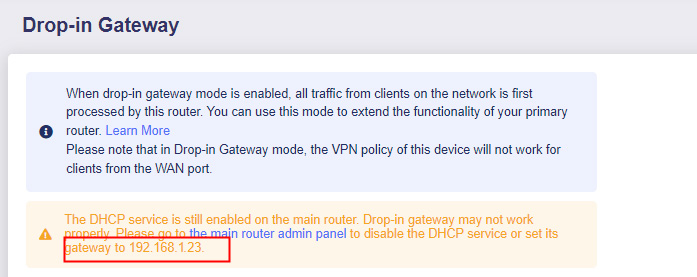
TP-Link
If your primary router is TP-Link, follow the steps below (Taking TP-LINK Archer C3150 as an example).
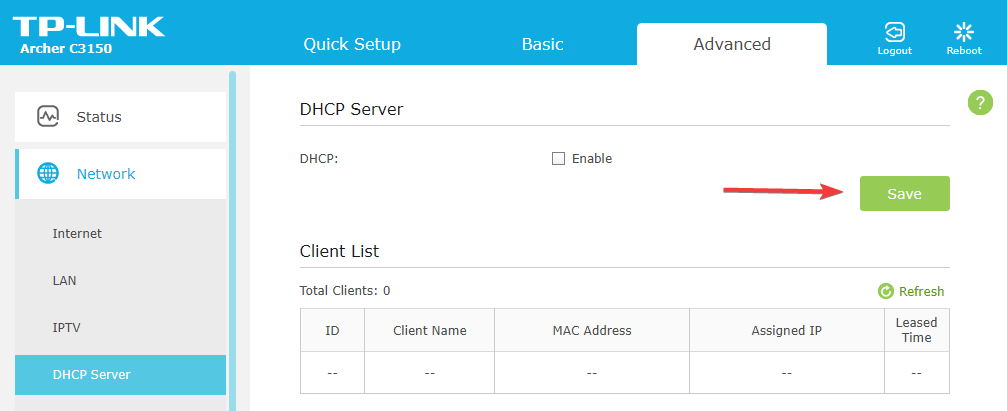
Log in to the TP-Link admin page, navigate to Advanced -> Network -> DHCP Server, then disable the DHCP.
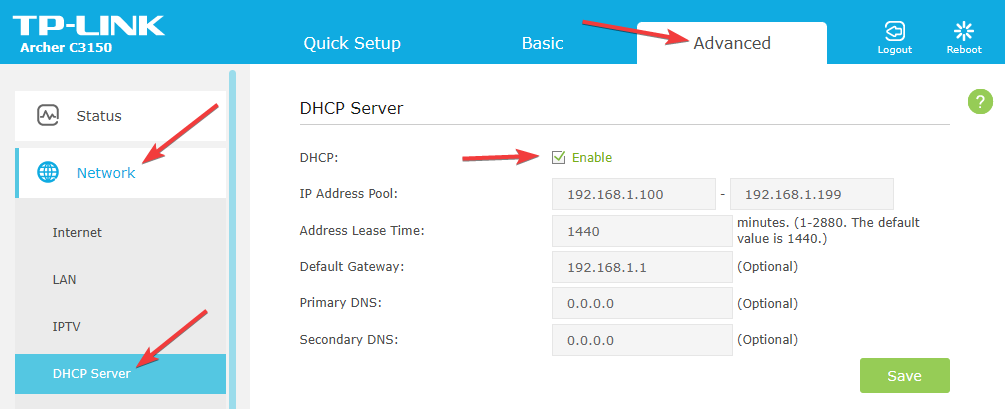
Then click Save.
Linksys
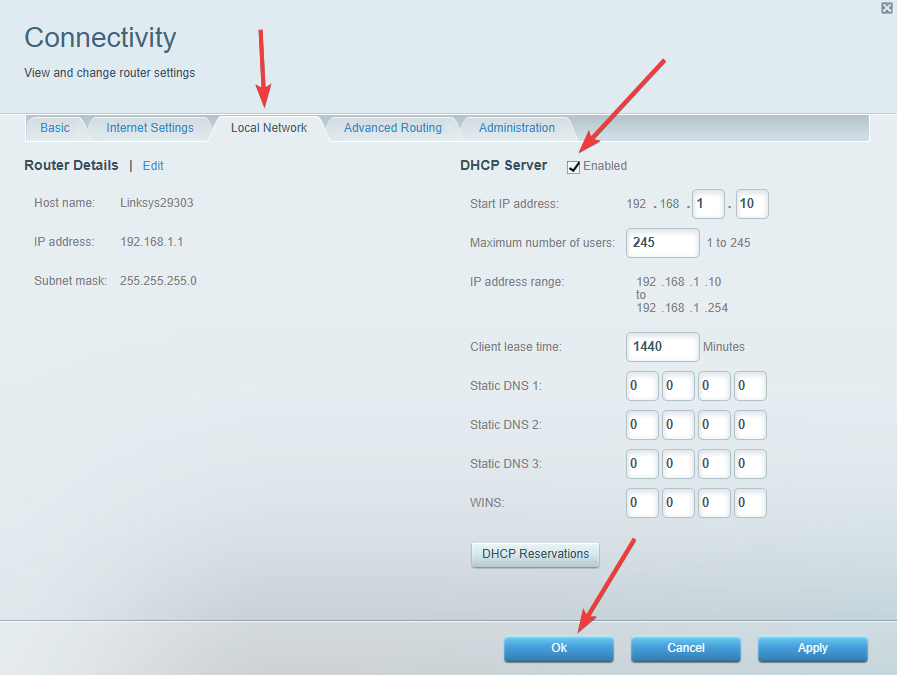
If your primary router is Linksys, follow the steps below (Taking Linksys WHW01 as an example)
Log in to the Linksys admin page, navigate to Router Settings -> Connectivity.
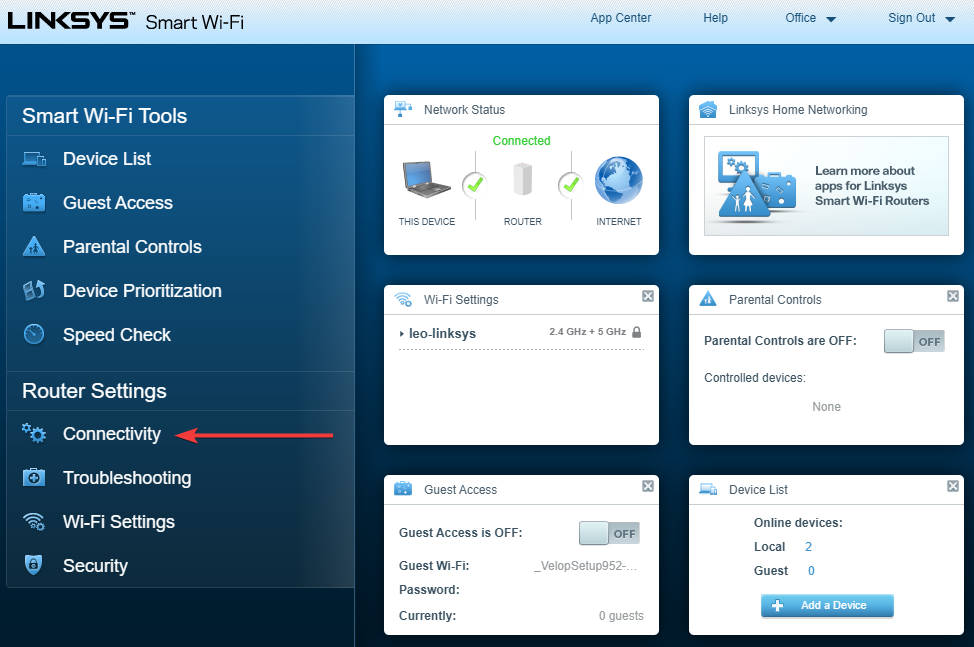
Click the tab Local Network, disable the DHCP Server, then click OK.
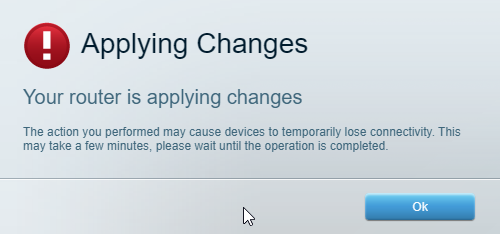
It will show a warning. Click OK.
Others
Please log in to the primary router's admin panel to disable its DHCP server. You may refer to the corresponding manufacturer's user manual, or consult their support.
-
Go back to the GL.iNet router and set up features like AdGuard Home, encrypted DNS, WireGuard Client and OpenVPN Client.
Specific devices are networked through Drop-in Gateway
-
Connect the LAN port of the primary router to the WAN port of the GL.iNet router via an ethernet cable.
-
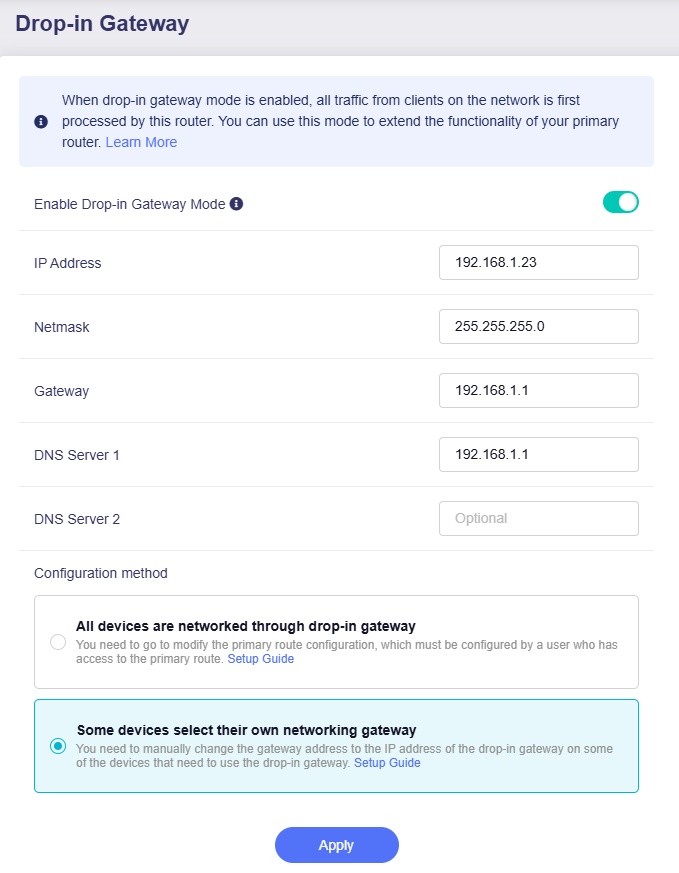
Log in to the web admin panel of your GL.iNet router, enable Drop-in Gateway, and the system will automatically generate the corresponding configuration parameters.
-
The IP Address refers to the WAN IP address of your GL.iNet router, which is dynamically assigned by the primary router. This WAN IP can be viewed in the Ethernet section of the INTERNET page.
-
The Gateway and DNS Server 1 fields are automatically filled with the IP address of the primary router by default. If these parameters are incorrectly configured, you can manually adjust them as needed.
Write down the IP address here, as you will use it in the following steps.
Select the second configuration method and click Apply.
-
-
Set the gateway and DNS on the device that you want to use the Drop-in Gateway feature as the IP address in Drop-in Gateway page.
Windows
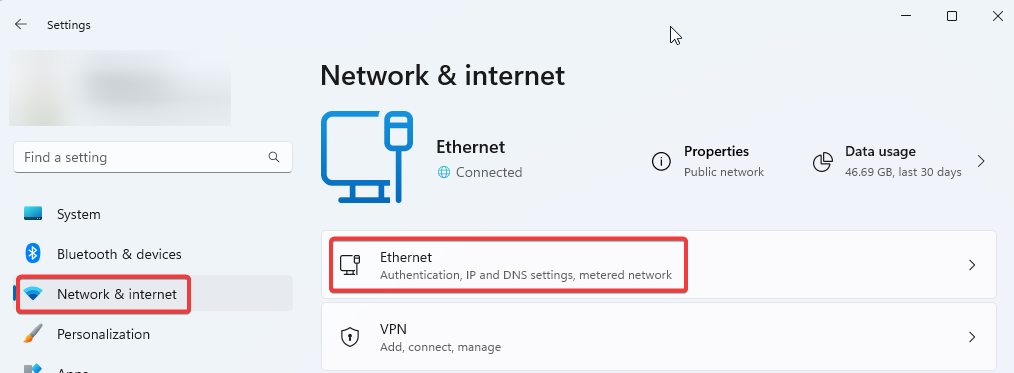
Here is an example of Windows 11, Windows 10 is similar. Make sure your PC is connected to the primary router. It is assumed here that your computer is connected to the primary router via a network cable, and the setup is similar if you connect via Wi-Fi.
-
Open Settings.
-
Click on Network & Internet.
-
Click the Ethernet tab.
-
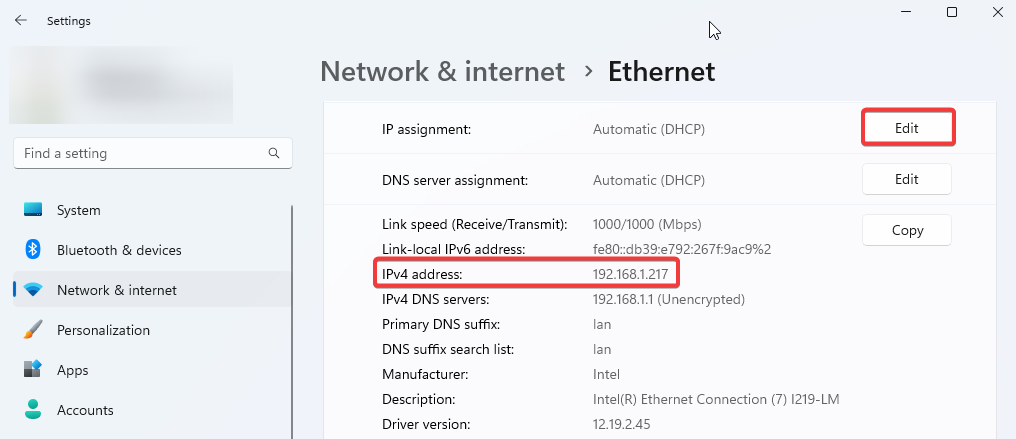
You will find the IP address of this PC. Under the "IP assignment" section, click the Edit button.
-
Select the Manual option. Turn on the IPv4 toggle switch.
-
Set the IP address as the IP address you see in step d, Subnet mask set as
255.255.255.0, both Gateway and Preferred DNS set as the IP address in Drop-in Gateway page.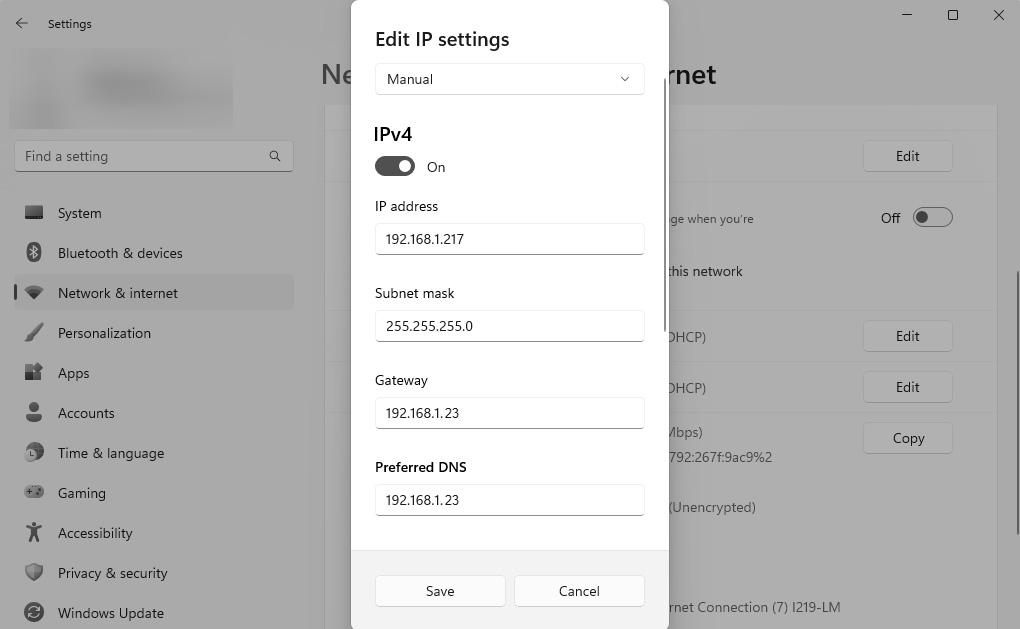
-
Click the Save button.
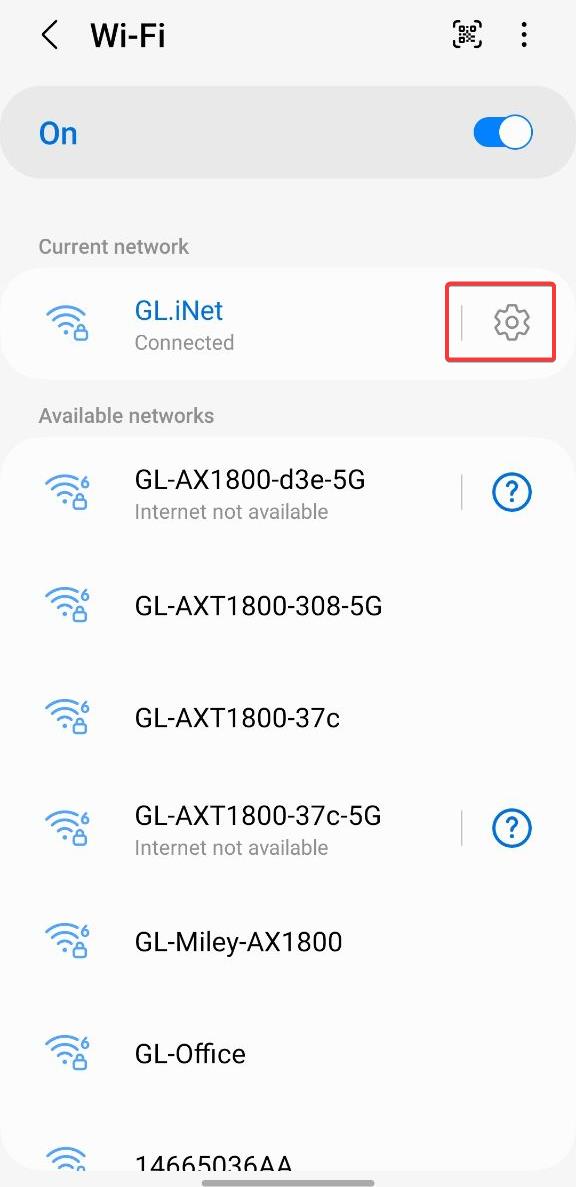
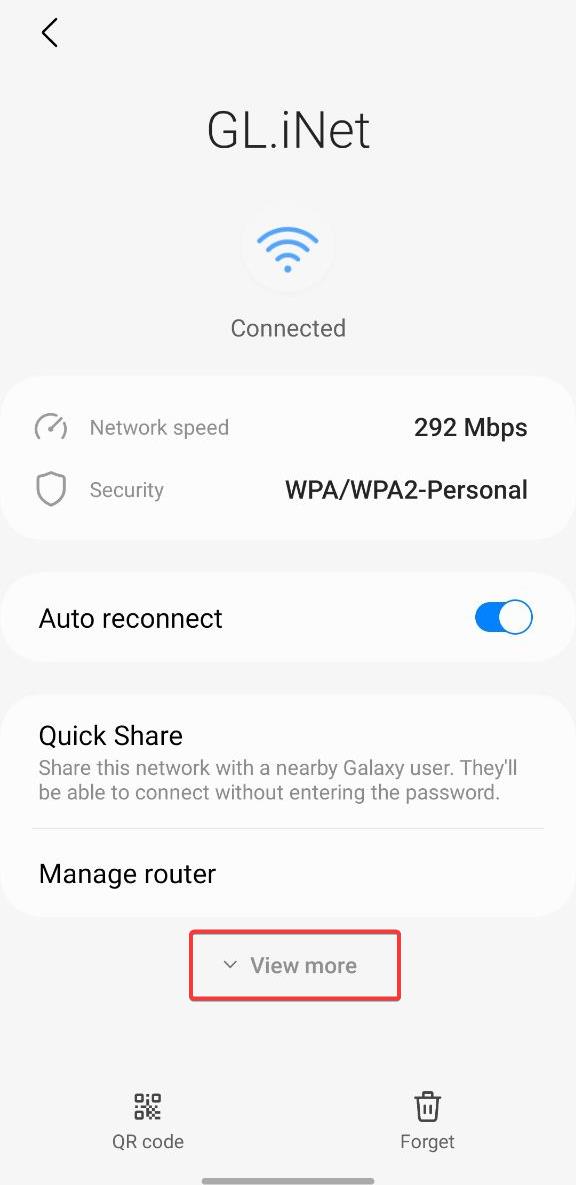
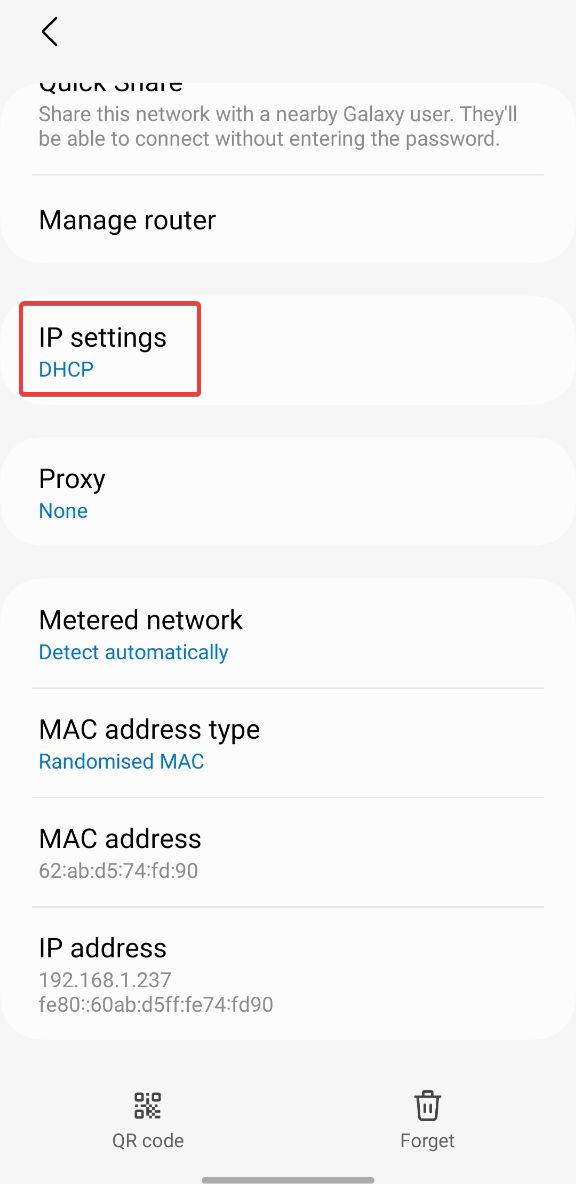
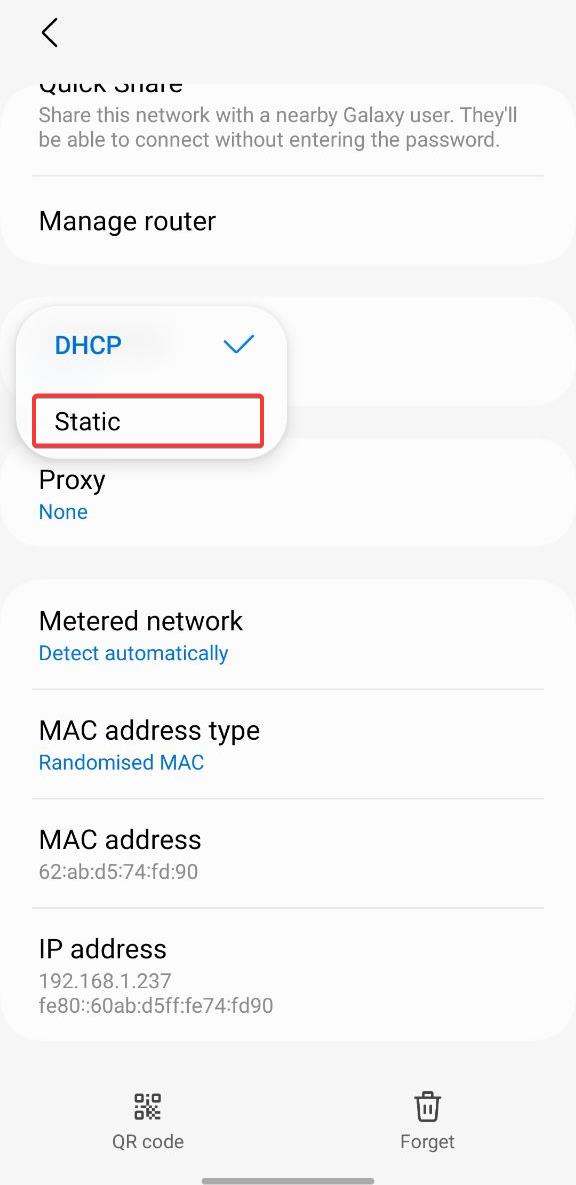
Android
Here is an example of Samsung S21. Make sure your smartphone is connected to the primary router.
-
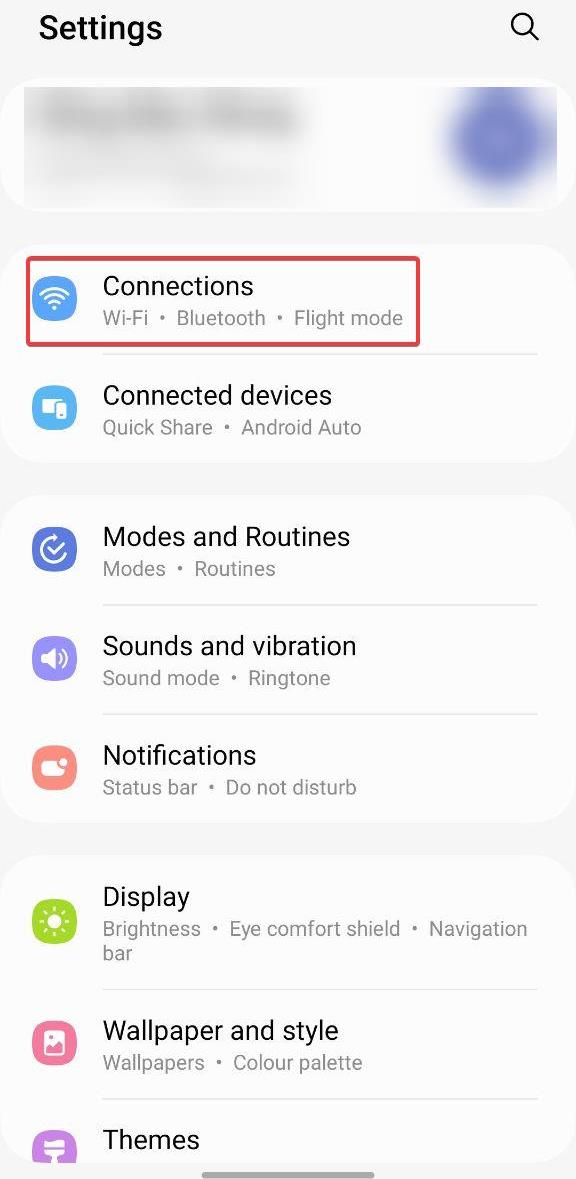
Open Settings, click on Connections.
-
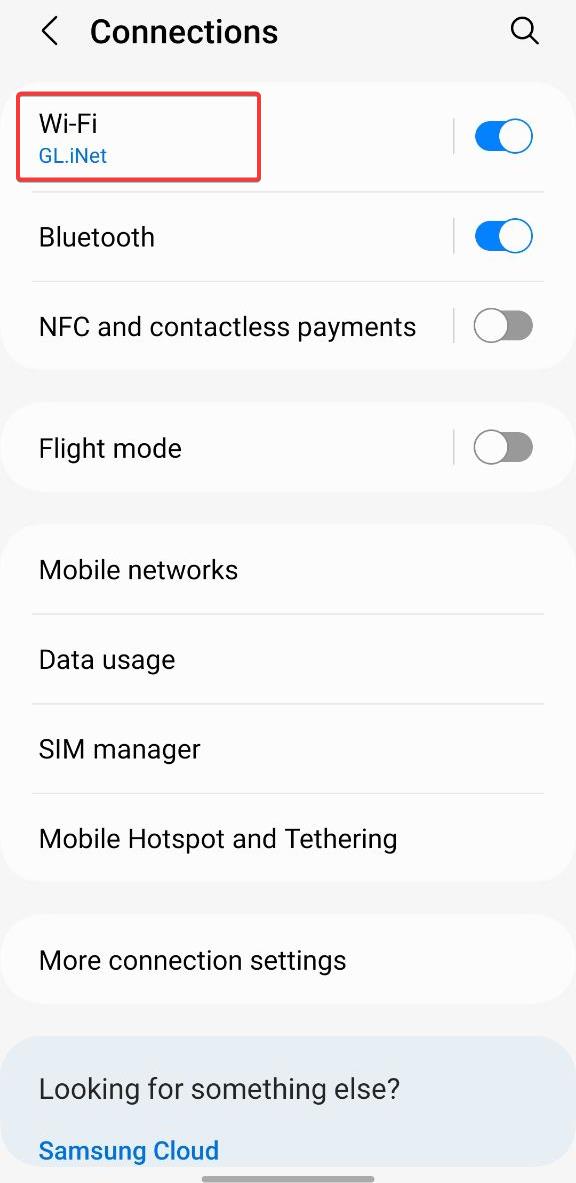
Click on Wi-Fi.
-
Click the cog icon of the current SSID.
-
Click View more.
-
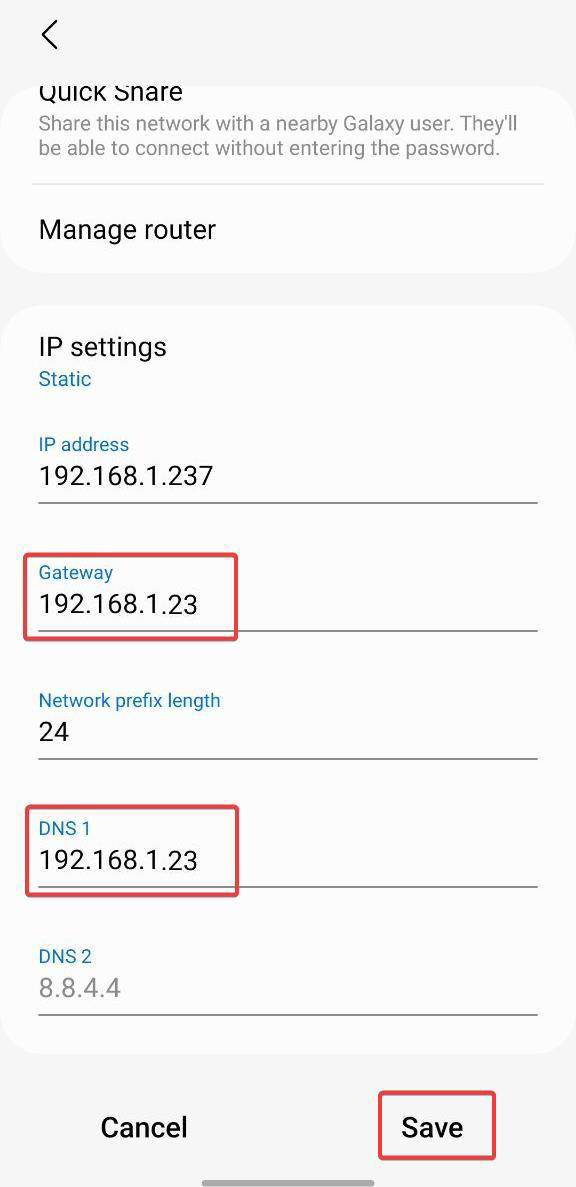
Click IP settings, choose Static.
-
Set the Gateway and DNS 1 as the IP address in Drop-in Gateway page, then click Save.
iOS
Here is an example of iOS 16.3 on iPhone 8. Make sure your smartphone is connected to the primary router.
-
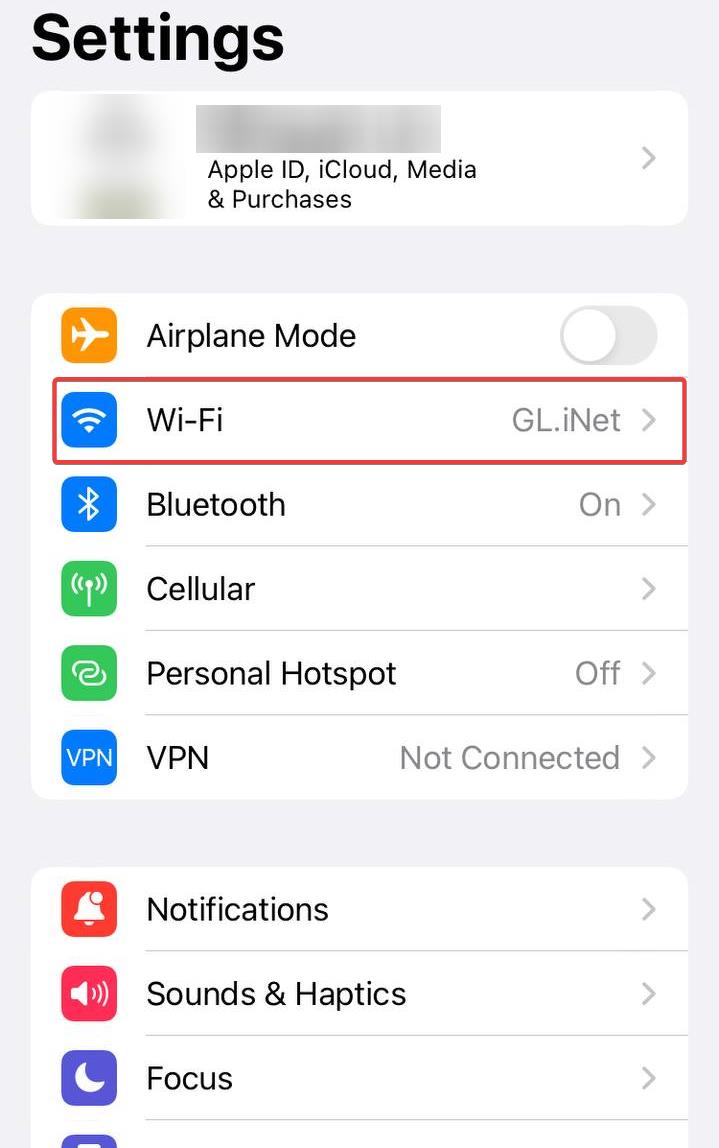
Open Settings, click Wi-Fi.
-
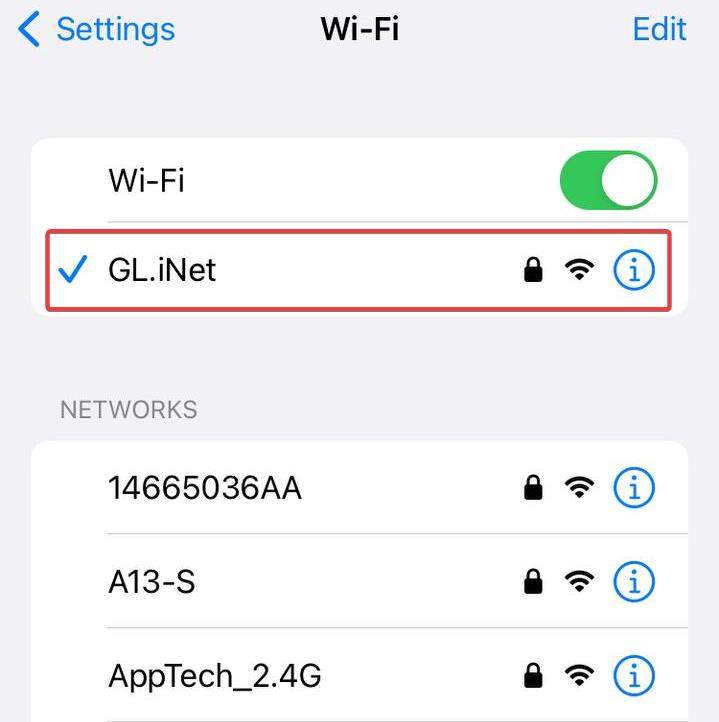
Click the SSID.
-
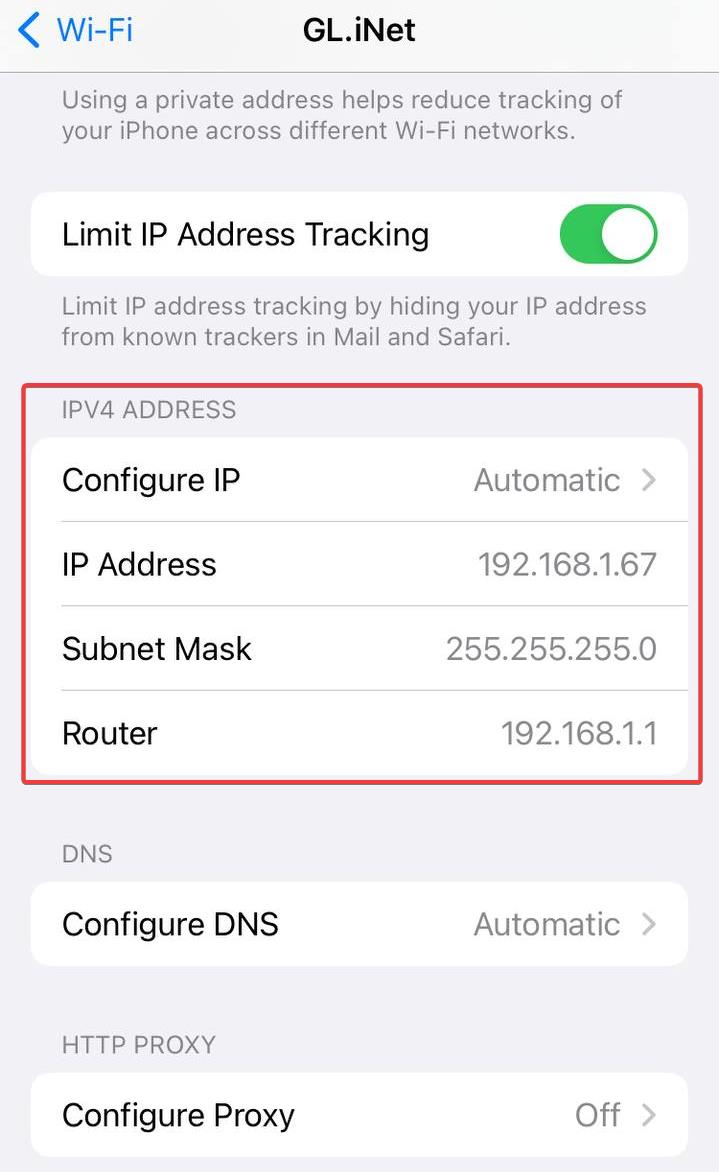
Scroll down and you will find the Configure IP is Automatic. Write down the IP Address and Subnet Mask for the next step.
-
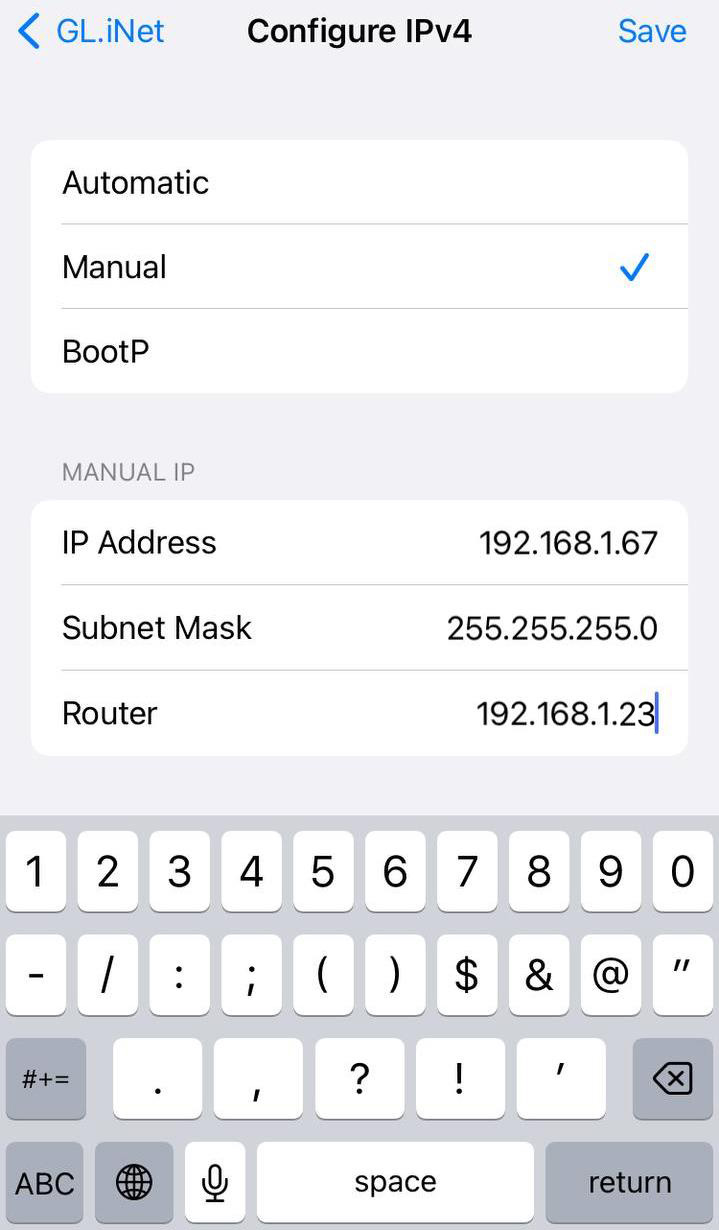
Change Configure IP to Manual, set the IP Address and Subnet Mask to the same as you obtained in the previous step, and set the Router as the IP address displayed on the Drop-in Gateway page, then click Save.
-
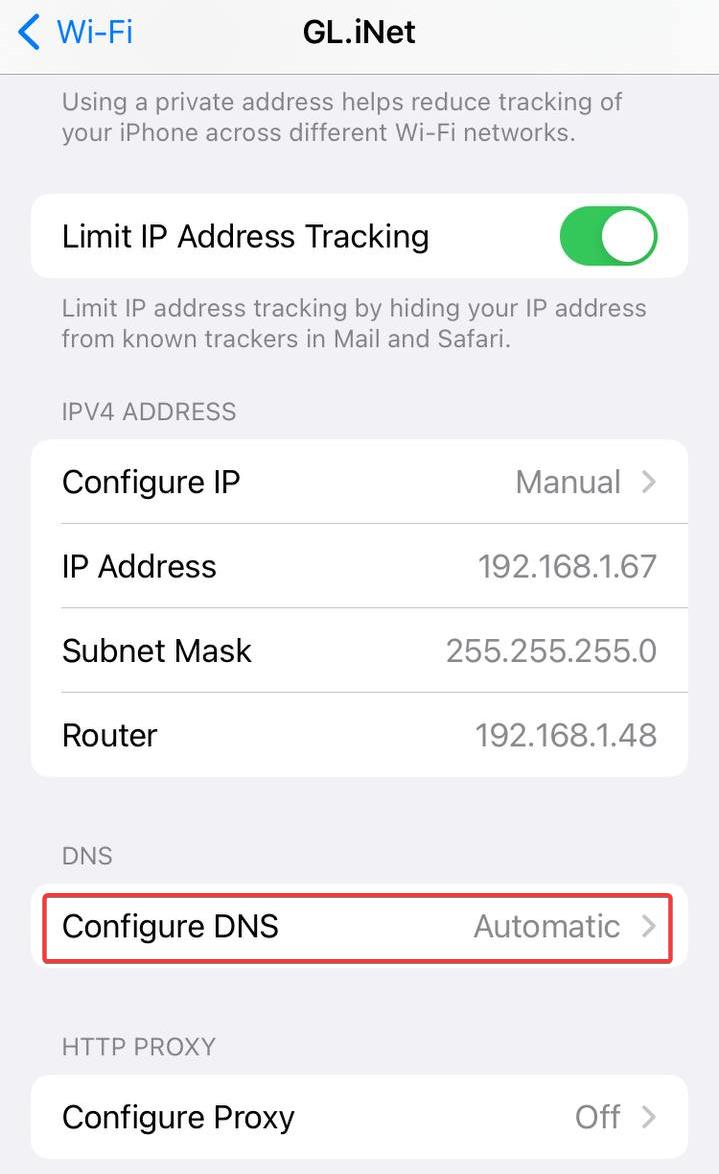
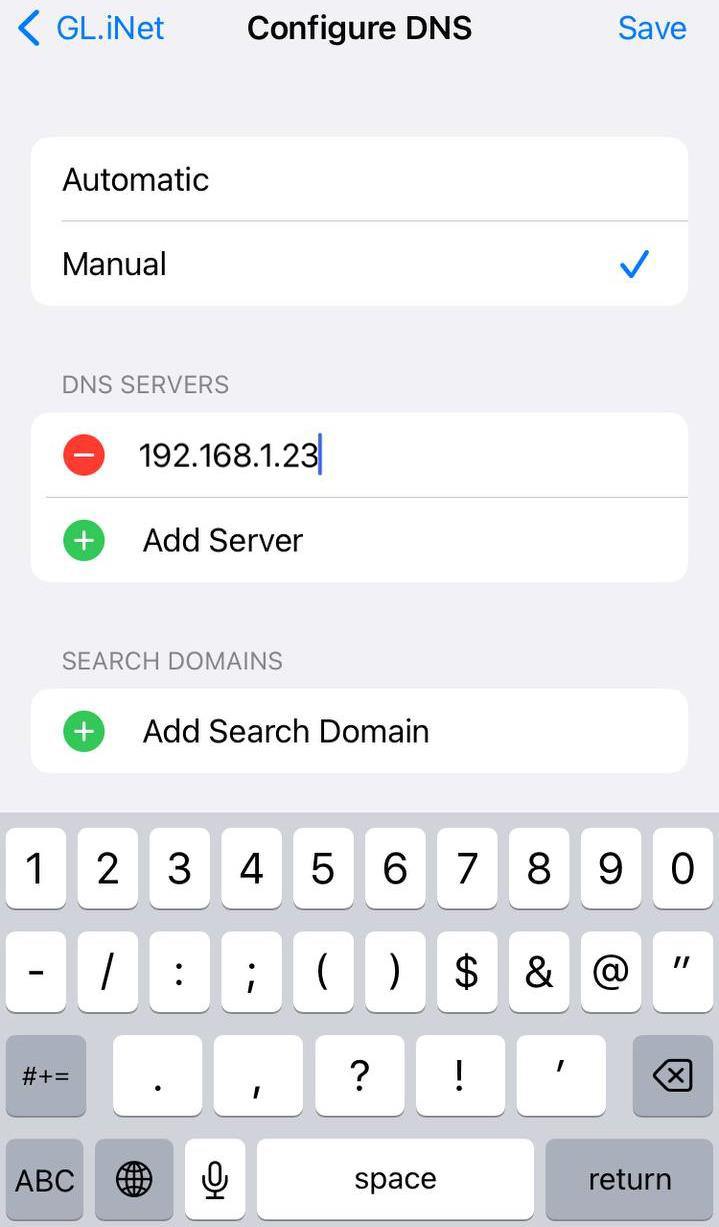
Click Configure DNS and change it to Manual. Click Add Server, set the DNS server IP address to the IP address displayed on the Drop-in Gateway page, then click Save.
-
-
Back to the GL.iNet router's web Admin Panel and set up features as needed, such as AdGuard Home, encrypted DNS, WireGuard Client and OpenVPN Client.
Cautions
-
Enabling Drop-in Gateway increases network latency.
-
When Drop-in Gateway is enabled, data transmission between selected LAN devices is also routed through the drop-in gateway. Bandwidth between the primary router and drop-in gateway therefore impacts overall LAN bandwidth.
Related Article:
Still have questions? Visit our Community Forum or Contact us.